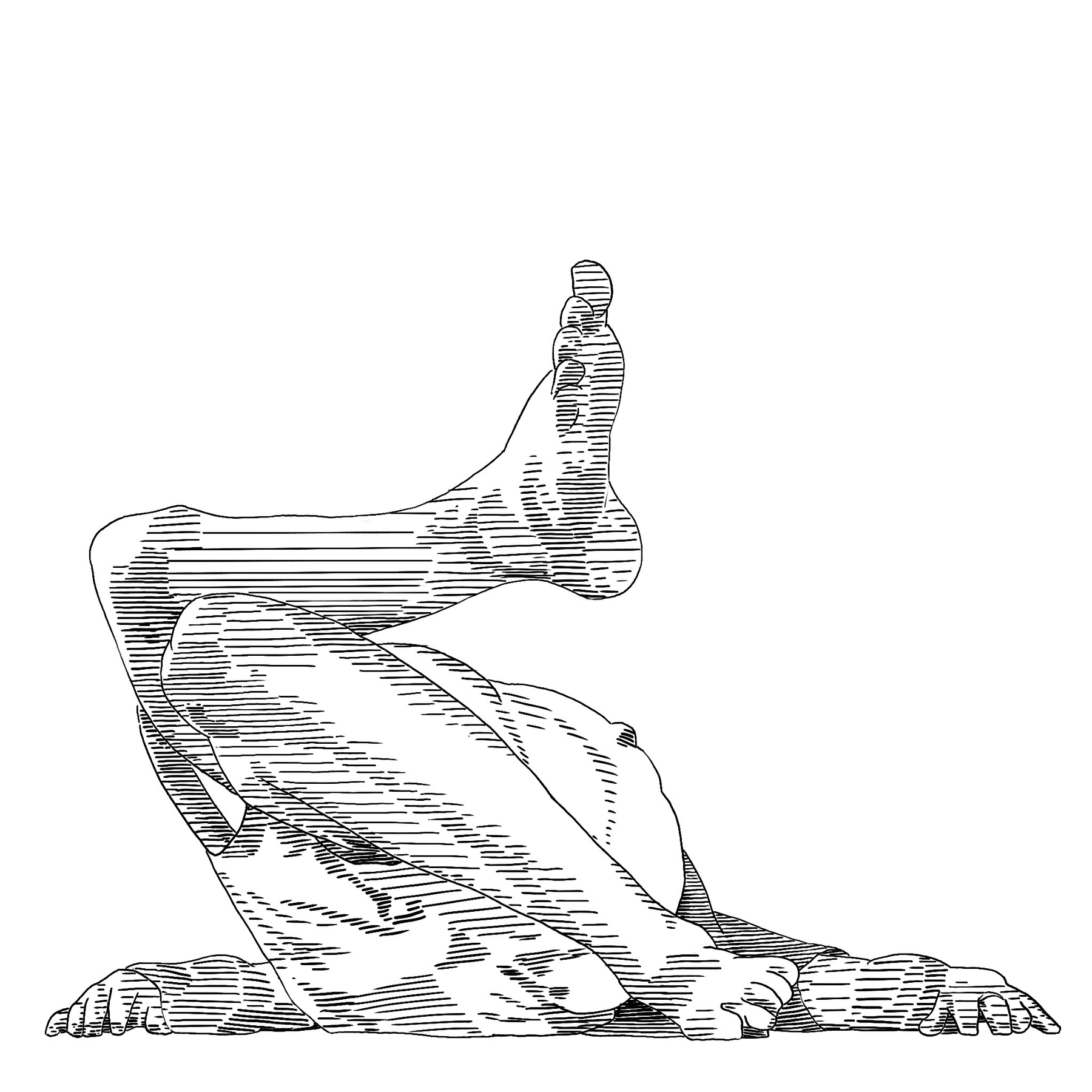
I’ve just acquired a typewriter, and it’s part of a new (to me) way of doing ATM transcriptions. I hope to write about this transcription process in the future, because it’s changing how I am approaching my ATM study.
One big aha, so far (I started transcribing Esalen 4 - Tilting Crossed Legs) is seeing how much of Feldenkrais' original language was edited out of the Stransky notes, namely some of the bigger picture ideas…
For example:
With some they draw (the legs) much nearer to the floor than with others. Is this structural? Is it human or is it personal? We want to know all that. And I want you, by the end of the lesson, you will see that it’s different from what’s now. And the real difference will remain only inasmuch as the body is differently built. But not with those fancy, parasitic contractions that there are in the body left over from the standing, from previous experience which has not been digested properly.
All this cool stuff Moshe says about the difference between structural constraints and personal habits, and the leftovers of previous experience that haven’t been properly digested… these details don’t appear in the Stransky notes.
I’m not sure who made the decisions to leave these things out. Was it Judith Stransky or Feldenkrais Resources, who published her “notes” in 1987? Based on this interview with Judith Stransky, I can imagine she might have felt like he was bloviating. Another possibility is that the ideas were just over her head? I’m saying that not as a knock on her, but because I have had the personal experience of not being able to really “hear” some stuff Moshe says when I don’t understanding it, and it all goes by so fast… Or maybe their removal stems from the fact that the opening lecture isn’t included in the notes, so when Feldenkrais refers back to ideas like these that he did introduce before, the editors didn’t think there was enough context to include the ideas?
Anyway, I’m trying to make sense of the editorial focus that leaves out ideas like these.